Famous Thinkers Quiz — Part 2
Can You Guess These Extraordinary Minds?
Nine more world-changing thinkers — all with one thing in common. Click each portrait to uncover who they are and discover how their unique minds shaped history!
9 / 9 — You're a Brilliant Thinker Champion!
Every single one of these world-changers saw things differently — and used that unique perspective to make history.
Your child's different thinking is not a barrier — it's a superpower waiting to be unlocked. Sarah's 30+ years of specialist experience is here to help. Start with a free conversation today.
Quiz 2 — All 9 Revealed
The Extraordinary Minds Behind the Quiz
Every one of these world-changers saw things differently. Many are known or believed to be dyslexic thinkers — powerful proof that a different kind of mind is often the most remarkable kind.

Walt Disney struggled in school and was told he had no creative talent. His dyslexia gave him an extraordinary visual imagination — the ability to picture entire worlds that had never existed before.
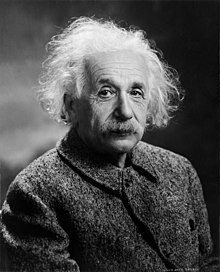
Einstein didn’t speak until age 3 and couldn’t read until age 7. He thought in pictures rather than words — a trait strongly linked to dyslexic thinking. His spatial imagination rewrote the laws of physics.

Diagnosed with dyslexia aged 8, Maggie’s teachers doubted her potential. She proved every one of them wrong — becoming one of the UK’s most celebrated scientists, an MBE, and a passionate STEM champion.

Scholars have identified characteristics in Beethoven’s written work consistent with learning differences. He composed his celebrated Ninth Symphony while profoundly deaf — hearing it entirely in his extraordinary inner mind.

Ford showed strong signs of dyslexia and struggled to read until age 9. His exceptional spatial and mechanical mind — classic dyslexic strengths — pioneered the assembly line and transformed modern manufacturing.

Diagnosed with dyslexia in her mid-twenties, Jennifer spent years feeling “stupid” in school. Understanding her dyslexia transformed her confidence — she credits it with shaping her emotional depth as an actress.

Bill Gates displays characteristics widely associated with neurodivergence — intense pattern recognition, systems thinking, and the ability to see connections others miss. His different mind built the world’s most successful software company.
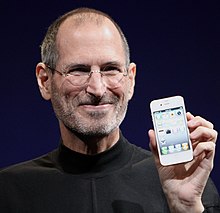
Jobs had characteristics strongly linked to dyslexia — he thought visually and spatially, not in text. His ability to see products from the user’s perspective and hold complex 3D designs in his mind defined Apple’s creative revolution.

Churchill was well-documented as a dyslexic thinker — he failed exams repeatedly, was placed in the bottom form at Harrow, and struggled throughout school. Yet he led Britain through its darkest hour and won the Nobel Prize for Literature in 1953.
Does Your Child Think Differently?
Every one of these extraordinary people was once a child who thought differently and was often told they weren’t good enough. The right support changes everything. Sarah’s 30+ years of specialist experience is here to help your child unlock their unique potential.
Book Sarah’s Free Consultation ⇒